Top ERP Trends in 2026: AI, Automation and Cloud ERP Evolution
AI, automation, and cloud ERP are reshaping how businesses operate in 2026. Here’s what growing companies need to know before modernizing operations.
Top ERP Trends in 2026: AI, Automation and Cloud ERP Evolution
Businesses are no longer looking at ERP systems as just software for accounting or inventory management. In 2026, ERP has become a central part of how companies operate, make decisions, manage teams, and respond to changing customer expectations.
What’s changing the most is not just technology itself — it’s the way businesses expect technology to work. Companies want faster processes, cleaner workflows, real-time visibility, and systems that reduce manual effort instead of adding complexity.
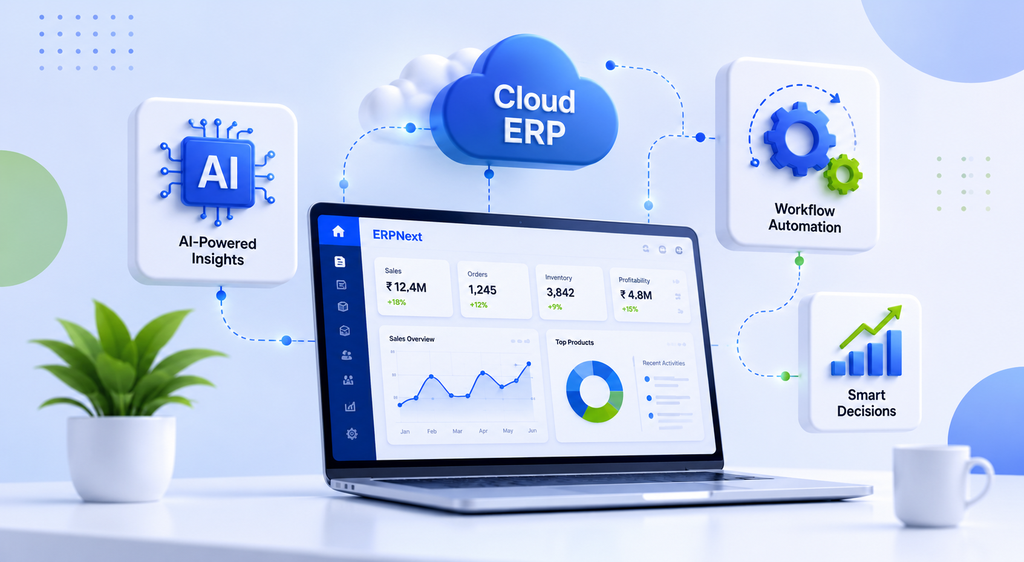
That’s exactly why trends like AI-powered ERP, workflow automation, and cloud-based ERP platforms are becoming more important than ever.
For growing businesses, especially SMEs and mid-sized companies, ERP is no longer a “future investment.” It’s quickly becoming a necessity for staying competitive and scalable.
At Tridots Tech, we’ve seen this shift closely while helping businesses modernize operations with ERPNext, cloud deployment, and business automation solutions.
1. AI Is Moving Inside ERP Systems
A few years ago, AI in ERP sounded experimental. In 2026, it’s becoming practical.
Businesses are now using AI inside ERP systems to simplify repetitive tasks, improve reporting, and help teams make faster decisions without manually analyzing large amounts of data.
Instead of spending hours preparing reports or searching through multiple records, ERP systems are beginning to offer smarter assistance directly inside workflows.
This includes:
- Smart data suggestions
- Automated report summaries
- Predictive insights for inventory or sales
- Faster document processing
- AI-assisted search and recommendations
Modern ERP platforms are also evolving toward AI-assisted workflows where users can complete tasks with fewer clicks and less dependency on technical teams.
ERPNext, combined with modern AI integrations, gives businesses the flexibility to experiment with practical AI use cases without investing in overly complex enterprise infrastructure.
2. Business Automation Is Becoming a Core Requirement
One of the biggest ERP trends in 2026 is the growing focus on automation.
Businesses are trying to reduce manual work wherever possible — not because teams are lazy, but because repetitive tasks slow operations down and increase the chances of mistakes.
Many companies still rely on: - spreadsheets - manual approvals - disconnected software - email-based follow-ups
As operations grow, these workflows become difficult to manage.
Modern ERP systems now automate processes like: - purchase approvals - invoice generation - payroll processing - inventory updates - customer follow-ups - notifications and alerts
This helps businesses operate more efficiently while allowing employees to focus on higher-value work.
With platforms like ERPNext, workflow automation has become much more accessible for growing businesses that want flexibility without enterprise-level licensing costs.
3. Cloud ERP Adoption Continues to Rise
The shift toward cloud ERP is accelerating in 2026.
Businesses increasingly prefer cloud-based ERP systems because they are easier to access, maintain, and scale compared to traditional on-premise setups.
Instead of maintaining expensive local servers and handling infrastructure internally, businesses now prefer secure cloud environments that support remote access, scalability, and faster deployments.
Cloud ERP helps businesses: - access data from anywhere - support hybrid teams - scale infrastructure when needed - reduce hardware dependency - improve backup and disaster recovery processes
This trend became stronger after businesses realized that flexibility and accessibility directly affect productivity.
Many growing companies now choose cloud deployment because it reduces IT complexity while improving operational continuity.
Businesses working with experienced cloud deployment partners can also improve performance, uptime, and security without building large in-house infrastructure teams.
4. ERP Systems Are Becoming More User-Friendly
Traditional ERP systems often had a reputation for being difficult to use.
Complex navigation, outdated interfaces, and long training periods made ERP adoption frustrating for many teams.
That expectation is changing.
In 2026, businesses want ERP software that employees can adapt to quickly. Clean dashboards, mobile-friendly interfaces, role-based access, and simpler workflows are becoming standard expectations.
Modern ERP platforms are focusing more on user experience because businesses now understand that software adoption directly affects ROI.
If employees avoid using the system properly, even the most powerful ERP becomes ineffective.
ERPNext has gained popularity partly because of its cleaner interface and modular approach, especially for businesses that want flexibility without excessive complexity.
5. Integration Is Becoming More Important Than Standalone Software
Businesses no longer operate using one single software platform.
Most companies today use: - CRM tools - eCommerce platforms - payment gateways - HR software - logistics systems - customer support tools
The challenge is making all these systems work together smoothly.
That’s why ERP integration is becoming a major priority in 2026.
Modern ERP systems are expected to connect with third-party applications through APIs and middleware solutions, helping businesses avoid disconnected workflows and duplicate data entry.
At Tridots Tech, integration and automation services are increasingly becoming part of ERP implementation projects because businesses want centralized visibility across operations.
6. Industry-Specific ERP Customization Is Growing
Businesses are moving away from one-size-fits-all ERP implementations.
A manufacturing company, a healthcare business, and a retail chain all operate differently. Their workflows, approvals, reporting structures, and operational priorities vary significantly.
Because of this, ERP customization is becoming more important in 2026.
Companies want ERP systems that adapt to their business — not the other way around.
This includes: - custom workflows - industry-specific reports - role-based dashboards - approval systems - localized processes
Platforms like ERPNext allow businesses to customize workflows more flexibly compared to many traditional ERP systems, which is one reason adoption continues to grow among SMEs and scaling businesses.
7. Businesses Want Faster ERP Implementations
Long ERP implementation cycles are becoming harder for businesses to accept.
Companies no longer want projects that take years before showing results.
In 2026, businesses prefer phased ERP implementation approaches where teams can start using core modules quickly and expand gradually over time.
Faster deployment helps businesses: - reduce operational disruption - improve adoption - start seeing ROI earlier - simplify employee training
This is one reason cloud-ready ERP platforms and modular ERP systems are gaining attention among growing businesses.
Working with an experienced ERPNext implementation partner can also make deployment smoother by aligning the ERP structure with actual business workflows instead of forcing generic setups.
The Future of ERP Is More Practical Than Complex
The biggest ERP trend in 2026 is not just AI, automation, or cloud technology individually.
It’s the shift toward practical ERP systems that businesses can actually use effectively.
Companies no longer want software that feels overwhelming. They want systems that: - simplify operations - improve visibility - reduce manual work - support business growth - adapt as processes evolve
ERP is gradually becoming less about “managing software” and more about improving business efficiency in a realistic way.
Final Thoughts
AI, automation, and cloud ERP are no longer future concepts. They’re already shaping how modern businesses operate in 2026.
But technology alone isn’t the real advantage.
The real value comes from choosing the right ERP approach, implementing it properly, and aligning it with how your business actually works.
At Tridots Tech, we help businesses adopt practical ERP solutions through ERPNext implementation, cloud deployment, workflow automation, and scalable digital transformation strategies tailored to real operational needs.
No comments yet. Login to start a new discussion Start a new discussion